
Real-Time Resilience: Why Webhooks Are the Nerve Pathways of Your IT Infrastructure
| Updated on
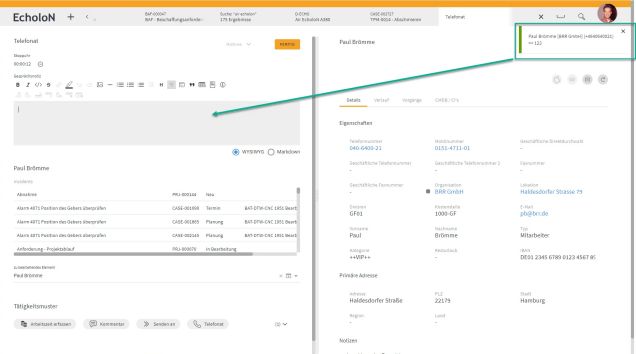
Data silos arise where systems don’t communicate with one another. In many companies, highly specialized software silos operate side by side, while employees manually copy data from A to B. This is not only prone to errors, but it also slows down the company’s overall response time. Anyone relying on batch processing or manual synchronization today is falling behind. Webhooks are the strategic answer to the demand for an event-driven architecture.
Away from Queries, Toward Events
Traditional polling—where one system constantly “checks in” with another to ask for updates—is a pure waste of resources. It puts a strain on servers and causes unnecessary latency. Webhooks flip this principle on its head: one system actively notifies the other as soon as a relevant event occurs.
A new lead in the CRM? The field service team is immediately notified via the framework. A critical status in monitoring? A ticket opens in the service desk within milliseconds. This push communication is the foundation of true agility. It enables your company to respond in real time to market changes or customer needs.
EcholoN: The Framework as an Integration Hub
Individual webhooks are quick to set up, but without centralized control, they lead to a tangled mess of connections—what’s often called “spaghetti code.” This is where EcholoN, as an enterprise application framework , really shines. It serves as an intelligent hub that not only receives webhook signals but also validates and processes them within the context of your business processes.
EcholoN orchestrates the data streams. It ensures that information from third-party systems—whether ERP, IoT sensors, or HR tools—flows seamlessly into existing workflows. At mIT solutions, we don’t build rigid bridges. We create a flexible integration layer that future-proofs your IT landscape. This keeps your stack modular and interchangeable without compromising process integrity.
Process Automation as a Competitive Advantage
The strategic value of webhooks lies in the automation of process chains across departmental boundaries. When systems interact without human intervention, the error rate drops to near zero. At the same time, transparency increases because every step in the process is documented in real time. This is the fuel for a modern, scalable service organization.
Note for IT architects: An in-depth analysis of how webhooks work, technical payload examples, and specific use cases can be found here:
Conclusion: Networking is a leadership responsibility
Silos are costly. Seamless integration through webhooks and a robust framework isn’t just an IT gimmick—it’s a commitment to operational excellence. mIT solutions can advise you on how to harmonize your system landscape and establish true real-time workflows.
Let’s connect your system landscape. We’ll show you how to turn data streams into real process advantages.